
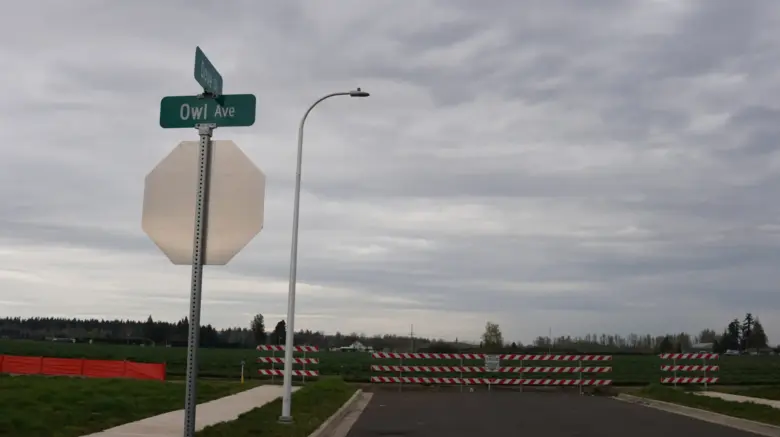
Our friends at 1000 Friends of Oregon recently highlighted a commentary by Nellie McAdams of the Oregon Agricultural Trust, defending the state’s urban growth boundaries at a moment when they’re once again being questioned. The piece is worth reading in full on the Oregon Capital Chronicle. Here’s why it matters for us in the Rogue Valley.
It’s become fashionable to call Oregon’s 50-year-old land use system “obsolete.” McAdams, a third-generation hazelnut farmer and attorney, dismantles that claim with something refreshing: data.
From 2016 through early 2025, Oregon cities filed 50 applications to adjust their urban growth boundaries. Ninety-six percent were approved. Most were approved within a year. Most weren’t appealed at all. That’s not a program choking off growth. That’s a program working the way it was designed to: asking cities to plan first, then expanding when the case is made.
What actually slows housing down, McAdams argues, isn’t the line on the map. It’s the infrastructure that has to go under it, and the subsidies that make affordable units possible in the first place. Bend expanded its UGB by more than 2,700 acres with room for over 8,800 homes, yet had permitted only about 700 by 2023, stalled by a $101 million transportation funding gap. Statewide, 45 shovel-ready affordable housing projects are waiting on subsidies that don’t exist. You can annex all the farmland you want. Until public dollars reach the roads, the pipes, and the rent-restricted units, the homes we most need won’t get built.
What this looks like here
The McAdams piece is about Oregon writ large, but the case lands hard in the Rogue Valley.
Our cities sit, as she notes, on top of our best agricultural soils. The pear orchards, vineyards, pastures, and small specialty farms that stitch this valley together aren’t just scenery. They’re an economy, a food system, and a watershed all at once. Once a Class II soil is paved, it’s gone. Not for a generation. Forever.
We’ve also learned the hard way that land isn’t the bottleneck. When the Almeda Fire tore through Phoenix and Talent in 2020, the parcels didn’t disappear. The obstacles to rebuilding were infrastructure, financing, permitting capacity, and support for displaced neighbors, the same constraints McAdams names. Years on, that recovery is still underway, and it has taught the valley exactly what “just add more land” gets wrong.
Affordability is its own chapter. Jackson and Josephine counties carry some of the heaviest cost burdens in the state. The households priced out of Ashland, Medford, Grants Pass, and the smaller valley towns aren’t going to be rescued by a subdivision at the edge of a UGB. Those homes will sell for what the market bears. What moves the needle is middle housing inside our existing footprints (duplexes, fourplexes, ADUs, cottage clusters), paired with the public investment that lets deeply affordable projects actually pencil out.
A living system, not a relic
1000 Friends put it beautifully in their note this week: land use isn’t a dusty artifact. It’s a living system, one that evolves with us and for us, holding firm on some lines while bending on others as we learn. The Oregon Housing Needs Analysis, passed in recent years, is exactly that kind of evolution. It requires cities over 10,000 to inventory their buildable land, plan for housing across five income categories, and expand their UGBs where the need is demonstrated. The system is bending. It isn’t breaking.
There’s an old idea that good stewardship means fighting for people whose names we’ll never know. The pear orchard we keep out of pavement today is a pear orchard a century from now. The compact town center we invest in now is the walkable neighborhood someone we’ll never meet calls home. The subsidized apartment funded this biennium keeps a family housed whose grandchildren may one day show up at a planning commission meeting to advocate for the same thing.
Oregon gave us a program built for that longer horizon. Our job in the Rogue Valley is to use it: to fund it, to sharpen it, to hold local leaders to it, not to trade it away for the false promise that a bigger boundary will solve a crisis that was never really about boundaries.
To engage with current land use issues in Jackson and Josephine counties, visit rogueadvocates.org.